Heavy Gauge Thermoforming Capabilities
Built for Large, Structural Parts
Designed for large plastic components requiring structural strength, rigidity, and long service life.
Thick Gauge & Large Format Capability
Supports heavy gauge sheet thicknesses up to 0.375 inch and molds up to 60 in × 84 in.
Faster, Lower Risk Launch
Shorter tooling timelines and lower upfront investment compared to capital-intensive molding processes.
Ideal for Low-to-Moderate Volumes
Supports flexible production, evolving designs, and controlled scaling.
Engineering-Led from Day One
Early collaboration validates geometry, material selection, and manufacturability.

What Is Heavy Gauge Thermoforming?
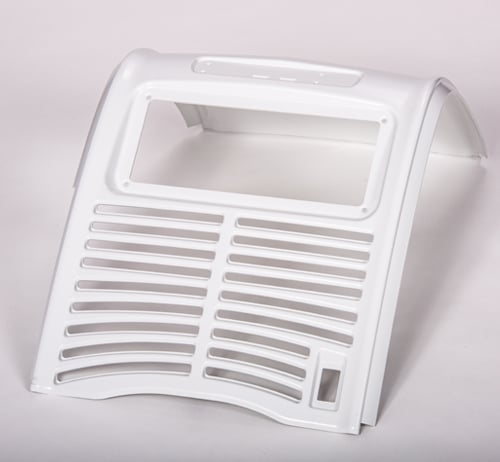
Heavy gauge thermoforming uses extruded plastic sheets that are heated, formed over a mold, cooled, and trimmed into finished components. Sheet thicknesses typically begin around 0.060–0.070 inch and commonly extend into thicker gauges, supporting deeper draws, structural rigidity, and robust secondary operations.
Compared to thin gauge packaging thermoforming, heavy gauge processes are engineered for large, durable parts such as housings, covers, and enclosures where strength, dimensional stability, and controlled trimming are required.

When Heavy Gauge Thermoforming Makes Sense
Heavy gauge thermoforming is well suited for low-to-moderate volume programs where speed to market, tooling flexibility, and upfront capital efficiency are important. Many customers use thermoforming to validate designs and market demand before committing to higher investment manufacturing paths.
This approach allows programs to move into production faster while maintaining the flexibility to adjust designs, materials, or tooling strategy as requirements evolve.
Rotary vs. Shuttle Thermoforming Capabilities
T.O. Plastics operates both rotary and shuttle cut-sheet thermoforming platforms, allowing processes to be matched precisely to part requirements and production needs.
Rotary Thermoforming
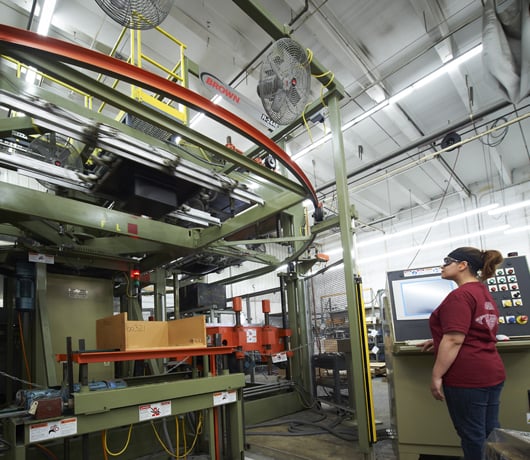
Rotary thermoforming is a multi‑station process where heating, forming, and cooling occur in parallel at discrete stations. Multiple sheets are processed at the same time across stations, improving throughput and repeatability for ongoing production programs once designs are validated.
Shuttle Thermoforming
Shuttle thermoforming processes one sheet at a time and is commonly used for prototypes, lower volume programs, or applications requiring frequent changeovers. The choice between rotary and shuttle equipment depends on the material type, geometry, and product lifecycle stage.
Forming Methods Supported
Heavy gauge thermoforming supports multiple forming techniques based on part performance, cosmetic, and structural requirements.
Vacuum Forming
Vacuum forming is the core forming method used in heavy gauge thermoforming. Heated plastic sheet is drawn over the mold using vacuum pressure, making this approach suitable for large, durable parts where overall shape, strength, and consistency are the primary requirements.
Pressure Forming
Pressure forming builds on vacuum forming by introducing positive air pressure to help push the heated sheet into finer mold details. This method is used when improved surface definition, tighter corner radius, or enhanced cosmetic features are required.
Plug-Assist Forming
Plug-assist forming uses a mechanical assist to pre-stretch and distribute material before forming. This technique helps manage wall thickness on deep draws or complex geometries and is applied when part design requires more uniform material distribution.
Twin-Sheet Forming
Twin-sheet forming bonds two simultaneously formed plastic sheets to create a hollow, double-wall structural component. This approach supports applications that require added stiffness, integrated features, or enclosed internal geometry while remaining within the heavy gauge thermoforming process set.
Tooling Strategy
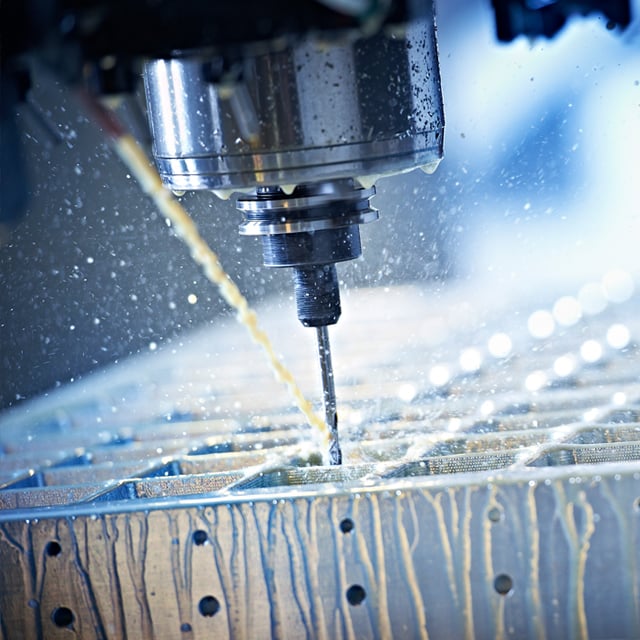
Tooling selection is based on part complexity, expected production volume, and program lifecycle. Heavy gauge thermoforming allows tooling strategies to be matched to each program’s requirements without the cost or rigidity associated with steel tooling.
Aluminum Production Tooling
Aluminum production tooling is used for ongoing programs where durability, efficient heat transfer, and repeatable part quality are required. These tools support consistent forming and cooling performance while still allowing modifications as designs evolve.
Prototype Tooling
Prototype tooling, typically produced from wood or polyurethane, is used during early-stage design validation. This approach supports faster iteration, lower upfront cost, and evaluation of part geometry before committing to production tooling.
Temperature-Controlled Tools
Water-cooled or heated tools are applied when improved cycle time, dimensional stability, or tighter process control is required. Controlled temperature helps improve part consistency and production efficiency for various material types.
Engineering-Driven Design for Manufacturability (DFM)
Design for manufacturability (DFM) focuses on aligning part geometry, wall thickness, corner radius, draft, and trim strategy with heavy gauge thermoforming processes. Early engineering involvement helps evaluate whether a design can be formed, trimmed, and produced efficiently before tooling and production decisions are finalized.
DFM support centers on identifying features that may introduce unnecessary cost, variability, or downstream processing challenges. By reviewing design intent in the context of forming methods, tooling approach, and post-form operations, engineering collaboration helps reduce production risk and supports smoother transitions from design into tooling and full-scale production.
Material Selection & Support
Material selection is one of the earliest and most influential decisions in heavy gauge thermoforming. Choices are guided by part performance requirements, environmental exposure, expected service conditions, and downstream processing needs rather than standardized assumptions.
T.O. Plastics supports a range of thermoplastic materials commonly used in heavy gauge applications, including:
- High‑Density Polyethylene (HDPE)
- Acrylonitrile Butadiene Styrene (ABS)
- Polycarbonate (PC)
- Thermoplastic Polyolefins (TPOs)
- High Impact Polystyrene (HIPS)
- Polyvinyl Chloride (PVC) / acrylic blends
- Polyethylene Terephthalate Glycol (PETG)
- Other engineered thermoplastics
Material selection support focuses on how material properties interact with forming behavior, trimming methods, and secondary operations, helping align material choice with manufacturability, end use, and efficient production.
Post-Form Trimming Methods
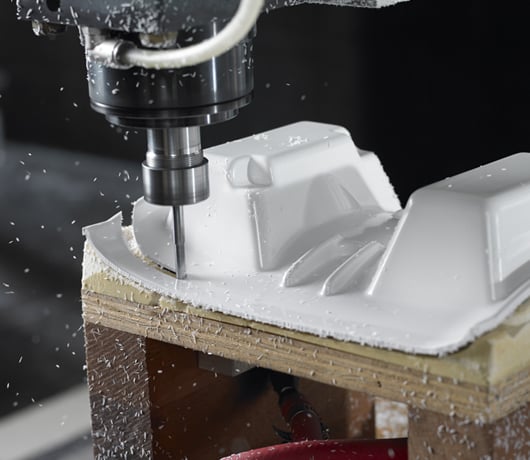
After forming, parts are trimmed to final dimensions using the method best suited to part geometry, material thickness, and dimensional requirements.
Steel Rule Die Trimming
Steel rule die trimming is used for parts with simple, planar trim lines and consistent geometry. This method supports efficient trimming for programs where repeatability and throughput are prioritized.
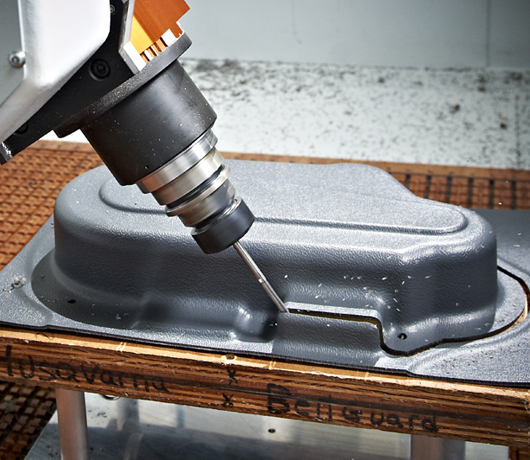
5-Axis CNC Trimming
5-axis CNC trimming is applied to thick gauges, complex contours, and parts requiring compound angles or precise feature placement. CNC trimming provides greater flexibility and accuracy for parts with nonplanar trim requirements.
Value-Added Secondary Operations
Value-added secondary operations build on forming and trimming to deliver parts in a more complete, application ready state, reducing downstream processing and supporting simpler, more integrated supply chains.
Bonding & Assembly
Bonding and assembly operations are used to join multiple formed components, add hardware, or create subassemblies. These processes support functional integration and reduce the need for additional downstream suppliers.
Painting & Surface Finishing
Painting and surface finishing are applied when parts require specific color, visual consistency, or surface protection. Processes are selected based on material type, part geometry, and end-use requirements, with finishes tailored to program needs rather than standardized assumptions.
Kitting & Packaging
Kitting and packaging services support organized delivery of finished components, helping align parts to customer workflows, reduce handling, and simplify inventory management.
Compliance & Quality Control
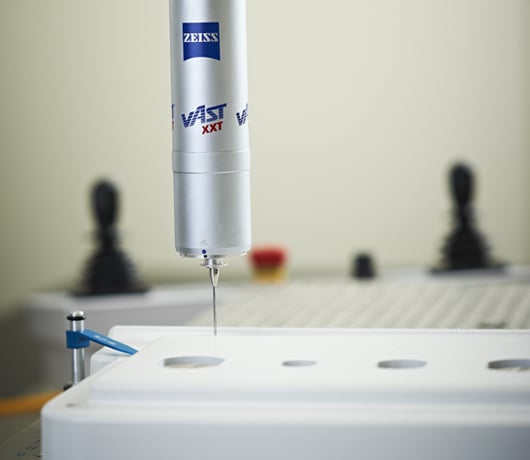
Compliance and quality control are integrated throughout the production process to support consistent execution and alignment with customer‑specific requirements. Inspection methods, documentation, and process controls are defined based on part geometry, tolerance needs, and program expectations.
Parts can be pulled at defined intervals and measured using coordinate measuring machines (CMMs) with CAD-based inspection programs, generating documented reports to confirm conformance throughout production. The quality management systems supporting the full manufacturing process are certified to ISO 9001:2015 and ISO 13485:2016, supporting consistency, traceability, and documented process control across design, manufacturing, inspection, and supporting activities.
Markets & Applications
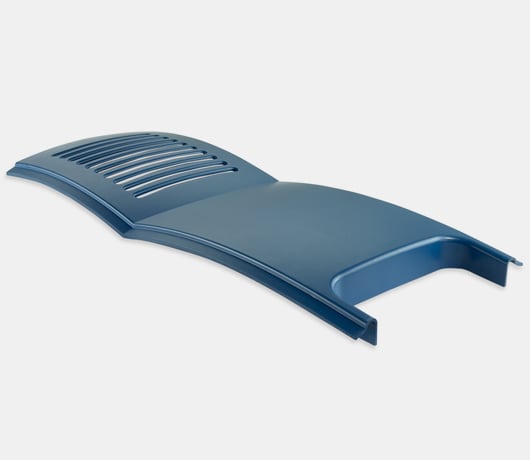
Heavy gauge thermoforming is best suited for applications that require large, durable plastic components with structural integrity and controlled manufacturing processes. It is commonly used for:
- Equipment housings and panels
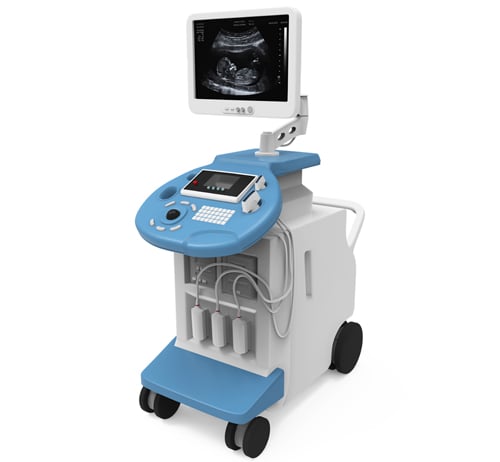
- Medical device enclosures
- Industrial covers and enclosures
- Dunnage trays and pallets
- Appliance housings
- Select transportation and vehicle panels
These applications are best served by heavy gauge thermoforming when components must protect high-value electronics or mechanical systems, support long service life, and achieve the right balance of structural durability, appearance, and manufacturability without the upfront cost or rigidity associated with higher-investment manufacturing processes.
Why Choose T.O. Plastics for Heavy Gauge Thermoforming
Manufacturing partnerships are often defined by more than forming capability alone. Program success depends on the ability to manage complexity, reduce downstream effort, and deliver parts that are ready to integrate into broader production workflows. Programs often select heavy gauge thermoforming with T.O. Plastics when flexibility, scalable tooling strategies, and time-to-production are prioritized over the higher tooling investment and rigidity associated with alternative manufacturing processes.
Engineering-Driven Program Support
Early engineering engagement focuses on design for manufacturability, helping evaluate material selection, sheet gauge, part geometry, and tooling approach before production commitments are made. This early collaboration reduces risk and helps avoid late-stage tooling changes.
Flexible Rotary and Shuttle Capabilities
Operating both rotary and shuttle cut-sheet thermoforming platforms allows programs to move from early validation into repeatable production without changing processes or suppliers. Equipment selection is aligned to part requirements and program stage rather than forcing a one-size-fits-all approach.
Scalable Tooling Strategy
Tooling approaches are selected to support program maturity, production volume, and long-term stability. Prototype and aluminum production tooling options enable efficient development while allowing tooling strategies to evolve as requirements change.
Value-Added Manufacturing Support
Value-added secondary operations build on forming and trimming to deliver parts in a more complete, application ready state, including bonded or assembled components, painted or surface finished parts, and kits or packaged assemblies. These services reduce downstream processing and support simpler, more integrated supply chains.
Heavy Gauge Thermoforming Resources

Heavy Gauge Thermoforming FAQs
What is heavy gauge thermoforming best used for?
Heavy gauge thermoforming is well suited for large, durable plastic components that require structural strength, dimensional stability, and controlled trimming. Common applications include equipment housings, industrial covers, panels, pallets, and dunnage trays.
What thickness qualifies as heavy gauge thermoforming?
Heavy gauge thermoforming typically starts around 0.060 inch and commonly extends up to approximately 0.375 inch, depending on part geometry, material selection, and performance requirements.
How does heavy gauge thermoforming compare to thin gauge thermoforming and injection molding?
Heavy gauge thermoforming differs from thin gauge thermoforming primarily in material thickness, forming approach, and production scale. Thin gauge thermoforming is commonly associated with lightweight, high-volume packaging applications using much thinner material. Injection molding is typically used for smaller, highly detailed molded parts produced at higher volumes and generally involves higher tooling investment and longer development cycles. Heavy gauge thermoforming is often selected when part size, tooling flexibility, and time to production are key program considerations.
How do rotary and shuttle thermoforming methods differ?
Rotary and shuttle thermoforming both use cut sheet material but differ in how parts move through the forming process. Shuttle thermoforming forms one sheet at a time and is best suited for prototypes, low-volume production, and frequent changeovers. Rotary thermoforming processes multiple sheets across parallel forming stations, supporting higher throughput and improved repeatability for established production programs.
What forming methods are supported in heavy gauge thermoforming?
Heavy gauge thermoforming can support multiple forming methods, including vacuum forming, pressure forming, plug-assist forming, and twin-sheet forming, depending on part geometry, surface detail requirements, and structural performance needs.
What is twin-sheet forming and when is it used?
Twin-sheet forming involves forming two sheets simultaneously and bonding them to create a hollow, double-wall structural component. It is used when applications require added stiffness, enclosed internal geometry, or integrated features while remaining within the thermoforming process.
What materials are commonly used in custom heavy gauge thermoforming services?
Custom heavy gauge thermoforming uses thermoplastic materials selected based on performance and manufacturability requirements. Common materials include HDPE, ABS, PC, TPOs, HIPS, PVC, PETG, and other engineered thermoplastics.
What value-added services are available with heavy gauge thermoforming?
Heavy gauge thermoforming programs can include value-added services such as CNC trimming, bonding and assembly, painting or surface finishing, and kitting or packaged assemblies. Integrating these services reduces lead time, improves consistency, and simplifies supply chains by minimizing handling, rework, and the need for multiple vendors. For many applications, value-added services ensure thermoformed parts are delivered ready to integrate directly into downstream production or assembly workflows.
How are heavy gauge thermoformed parts inspected during production?
Parts can be pulled at defined intervals and measured using coordinate measuring machines (CMMs) with CAD-based inspection programs. These inspections generate documented reports used to confirm conformance throughout production based on customer requirements.
How does ISO certification apply to heavy gauge thermoforming processes?
The quality management systems supporting the full manufacturing process are certified to ISO 9001:2015 and ISO 13485:2016, supporting consistency, traceability, and documented process control across design, manufacturing, inspection, and supporting activities. These certifications apply to the management systems and processes, not to individual materials or products.