
Some packaging materials protect against impact. TOPSTAT® HIPS roll stock does that and more: it actively manages electrostatic charge so sensitive components arrive at their destination intact and perform as intended.
T.O. Plastics developed TOPSTAT specifically for thermoformers serving electronics and automotive markets, where ESD protection isn’t optional. The product line combines the proven thermoformability of high impact polystyrene with engineered static-control properties, giving forming operations a reliable, production-ready material that meets performance requirements without adding complexity to the line.
Whether your application calls for static-dissipative trays for circuit boards or conductive dunnage for an automotive assembly line, TOPSTAT delivers consistent gauge, predictable forming behavior, and the documentation to back it up.
What Is TOPSTAT HIPS Roll Stock?
TOPSTAT begins with high impact polystyrene (HIPS) that thermoformers already trust and adds engineered static control. Understanding what goes into the product helps buyers specify the right configuration for their application and avoid the performance gaps that come from selecting a material by name rather than by specification.
Definition and Composition
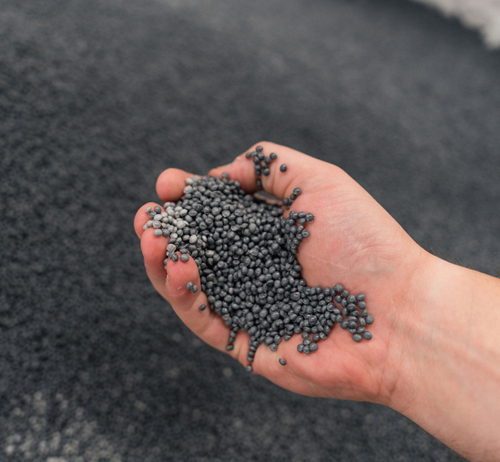
TOPSTAT starts with a high impact polystyrene (HIPS) base, a thermoplastic widely used in thermoforming for its excellent formability, dimensional stability, and cost efficiency. T.O. Plastics then incorporates static-control properties to the base material through one of two methods.
The first is a topically applied static-dissipative coating. The second is internal compounding, where carbon black is blended directly into the resin before extrusion. Each method produces a different resistivity profile, and the right choice depends on what the finished part needs to do.
Key Material Characteristics
TOPSTAT HIPS delivers the forming characteristics thermoformers expect from a quality roll stock. The material heats uniformly across its cross-section, draws cleanly into mold geometry, and cools predictably. Gauge control is tight throughout the web, which keeps downstream variability low. The material is also durable enough to handle the mechanical demands of shipping and repeated handling without sacrificing the lightweight profile that reduces your freight costs.
The defining characteristic is static control. Depending on the product configuration, TOPSTAT achieves surface resistivity in the static-dissipative range (10⁸ to 10¹⁰ ohms) or the conductive range (104 to 107 ohms), allowing buyers to specify a material matched to the exact performance requirement.
Why TOPSTAT vs. Standard HIPS
Standard HIPS is an excellent thermoforming material. TOPSTAT is what you reach for when standard HIPS gets you most of the way there but leaves you without ESD protection.
This difference matters in regulated environments. Electronics packaging must meet industry standards for electrostatic protection. Automotive OEMs often specify conductivity requirements for dunnage handling electronic subassemblies. Standard HIPS cannot meet those specifications. TOPSTAT can, without requiring thermoformers to switch to a more expensive or less formable base material.
5 Core Benefits of TOPSTAT HIPS Roll Stock
The case for TOPSTAT comes down to what it does on the line and what it prevents in the field. Each of the following benefits directly relates to a cost or risk that electronics and automotive thermoformers face in real production environments.
1. Electrostatic Discharge (ESD) Protection
A single electrostatic discharge event can damage or destroy sensitive electronic components without leaving a visible mark. The failure often shows up later, during testing or in the field, when diagnosing the cause is difficult and the cost is high. TOPSTAT packaging prevents that scenario by controlling charge buildup before it reaches harmful levels.
2. Superior Thermoforming Performance
If you've chased gauge variation across a high-volume forming line, you know exactly what consistent incoming material is worth. TOPSTAT runs well on standard thermoforming equipment. The material reaches its forming window quickly, distributes heat uniformly, and maintains consistent draw ratios across the web. Scrap rates stay low because the material behaves predictably from the first run to the thousandth.
3. Custom Extrusion Capabilities
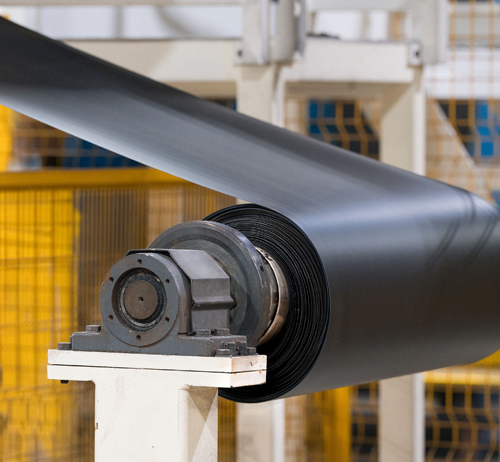
T.O. Plastics produces TOPSTAT in thicknesses from 18 mil to 88 mil and widths from 24 to 58 inches on six-inch cores. Roll weights range from 500 to 2,500 pounds. That configuration range covers most thermoforming equipment in service today and extends into heavy-gauge territory that most extrusion operations can’t supply.
4. Cost Efficiency at Scale
HIPS processes at lower forming temperatures than most engineering alternatives, reducing energy consumption and shortening overall cycle time. Tight gauge control means less scrap and fewer process adjustments. Trim and edge material from the forming line are compatible with regrind processing, and T.O. Plastics supports that through a scrap buy-back program that recovers value on production waste.
5. Regulatory and Quality Compliance
T.O. Plastics holds ISO 9001:2015 certification, and that quality system applies to every TOPSTAT production run. Throughout production, our team measures and documents surface resistivity, verifies thickness uniformity, and maintains lot traceability. For customers supplying OEMs with documented quality requirements, that level of process discipline is a baseline expectation, and TOPSTAT meets it.
Advanced Extrusion Technology Behind TOPSTAT
The static-control properties in TOPSTAT don’t happen by accident. They are the result of process decisions made before the material ever reaches a forming line, from how we prepare the resin to finished roll verification before it ships.
Precision Extrusion Process
Producing TOPSTAT to specification requires tighter process control than standard roll stock extrusion. For example, the gauge must be held within narrow tolerances across the full web width. T.O. Plastics maintains equipment precision and process discipline to consistently hit quality parameters, run-to-run.
Material Engineering
The choice between topical coating and internal carbon-black compounding is an engineering decision, not just a preference. Topical coatings achieve surface static dissipation and work well for many electronics packaging applications. Internally compounded material distributes conductivity through the full cross-section of the web. That matters when surface wear is a factor or when the application demands a consistent resistivity reading regardless of which side of the tray contacts the component.
T.O. Plastics can walk customers through the three categories of static control (anti-static, static dissipative, conductive) and help identify the right ohms range for each application before production begins.
Quality Control and Testing
Every TOPSTAT production run goes through surface resistivity testing, thickness uniformity verification, and lot documentation. These processes support customers who must demonstrate compliance with downstream customer or regulatory requirements and the paperwork follows the product.
Key Applications of TOPSTAT HIPS Roll Stock
Static control is a requirement in more places than it used to be. As electronics find their way into more products and more industries, the packaging and handling materials surrounding those components will have to keep pace. TOPSTAT serves the markets where that requirement is most consistently met.
Electronics Industry Applications
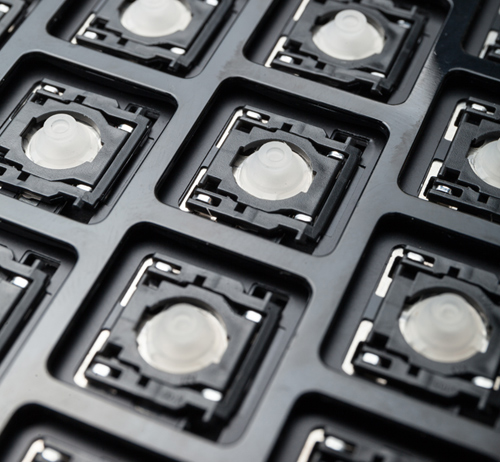
Electronics packaging has one job above all others: to protect sensitive components from electrostatic charge throughout the entire handling chain. Thermoformers producing trays and carriers for these components need roll stock that meets ESD specifications without compromising forming quality.
TOPSTAT provides both. The material thermoforms cleanly into precise tray geometry and delivers verified static-dissipative or conductive performance.
What type of plastic is best for ESD-safe electronics packaging? Static-dissipative or conductive HIPS, such as TOPSTAT, is the preferred base material for thermoformed electronics trays because it combines verified resistivity performance with excellent formability and cost efficiency.
Automotive Industry Applications
Why is conductive HIPS used in automotive manufacturing? Automotive electronics components require packaging that actively dissipates or conducts electrostatic charge. Conductive HIPS achieves lower surface resistivity than anti-static materials, meeting the stricter ESD requirements that many OEMs specify for handling electronic subassemblies.
Automotive OEMs and their Tier 1 suppliers use thermoformed plastic trays throughout the production process: for dunnage, for work-in-process handling, and for shipping finished assemblies. When those assemblies include electronic control units or other static-sensitive components, the tray material needs to provide ESD protection in addition to mechanical protection.
TOPSTAT serves this role well. The material handles the repeated loading and unloading cycles of a busy assembly line without wearing down. Consistent geometry run to run prevents handling problems caused by trays that vary in dimension.
Additional Industrial Applications
Beyond electronics and automotive, TOPSTAT supports consumer electronics retail packaging and industrial component handling where static control adds value. In every case, the requirement is the same: packaging that protects against more than just physical impact.
Customization Options for ESD-Safe Thermoforming Applications
No two forming programs are identical, and TOPSTAT is built to reflect that. Gauge, width, and conductivity level are all configurable, so buyers can specify a material that fits their equipment and meets their performance requirements rather than adapting their process to a standard product.
Thickness and Gauge Control
Thin-gauge TOPSTAT works well for lightweight packaging trays where part weight and material cost are primary drivers. Heavy-gauge configurations up to 88 mil support structural applications, such as industrial dunnage trays, that withstand repeated mechanical stress. T.O. Plastics holds gauge to tight tolerances across that full range, giving thermoformers a consistent input material at whatever thickness your application demands.
Roll Dimensions and Formats
TOPSTAT ships on six-inch cores in widths from 24 to 58 inches and roll weights from 500 to 2,500 pounds. Matching roll configuration to the thermoforming equipment reduces changeover frequency and web waste. T.O. Plastics works with customers at the front end to optimize roll specifications before production begins.
Performance Tuning
Static-dissipative and conductive materials occupy different resistivity ranges, and the right specification depends on the application. For general electronics trays, static-dissipative materials in the 10⁸-10¹⁰ ohms range cover most requirements. More demanding applications, such as direct contact with bare die or highly sensitive components, may require conductive material with a range of 104-107 ohms. T.O. Plastics can help buyers identify which range their application needs and specify the material accordingly.
How TOPSTAT Supports Manufacturing Efficiency
A specialty material that creates production headaches defeats its own purpose. TOPSTAT is designed to run consistently, not just perform well as a finished part. The efficiency advantages are built into the material, not added on.
Material Consistency Equals Process Stability
When incoming roll stock varies in gauge or surface properties, forming operations incur costs in scrap, rework, and machine time. Consistent gauge across the web lets operators confidently set process parameters and leave them there. Fewer adjustments mean more uptime and more predictable output.
Supply Chain Advantages
T.O. Plastics maintains open capacity on our production line. That is a meaningful advantage for customers who experience lead time roadblocks from more constrained suppliers. Customers typically receive standard and custom TOPSTAT orders faster than they expect, and the team is prepared to accommodate urgent requests when production scheduling allows.
Comparison: TOPSTAT vs. Other ESD Plastic Materials
TOPSTAT is not the only ESD-capable material on the market. Here is how it compares to common alternatives in the categories that matter most to thermoformers:
|
Specification
|
TOPSTAT HIPS |
PET | PVC | ABS |
|
Thermoformability
|
Excellent | Excellent | Good | Good |
| Cost Efficiency | High | Moderate | Moderate | Moderate |
|
Recyclability
|
Excellent | Good | Good | Good |
TOPSTAT offers the strongest combination of thermoformability and cost efficiency.
How to Choose the Right Roll Stock for Your Application
The right TOPSTAT configuration depends on what the finished part needs to do and how the forming line needs to run. A few key questions at the front end of a project prevent the kind of specification mismatches that arise later as yield problems or compliance gaps.
Key Considerations
Starting with the ESD requirement, what static control does the application require? The answer determines the ohms range. Many OEMs specify resistivity ranges in their packaging standards, and the material specification must meet those ranges. Other considerations include:
- Topical Coating or Internal Additive
- Gauge, Width, and Roll Weight
Decision Framework
For electronics packaging, prioritize the conductivity range first. Match the surface resistivity to the component sensitivity level, then optimize the gauge for tray geometry and part weight.
For automotive applications, durability and dimensional consistency are important factors. Any trays that vary in shape create handling problems on the assembly line, and that cost can multiply quickly at production volumes. Specify a material and supplier that can reliably hold the required tolerances.
For high-volume production programs, evaluate the total cost of use rather than the material price alone. HIPS costs less to run than the raw material price suggests, largely because lower forming temperatures shorten cycle times and trim scrap is compatible with regrind processing.
Ready To Specify TOPSTAT for Your Application?
TOPSTAT HIPS roll stock does what general-purpose packaging materials cannot: it protects sensitive components from electrostatic discharge while giving thermoformers a material that runs efficiently and holds its specifications from one production run to the next.
TOPSTAT is the answer for electronics packaging, automotive component handling, or any application where ESD protection is required.
Reach out to discuss your static control requirements and request a quote.

Frequently Asked Questions
What extrusion solutions are used to produce TOPSTAT HIPS roll stock?
T.O. Plastics uses precision plastic roll stock extrusion with engineered die systems and tightly controlled melt temperatures to produce TOPSTAT. Process discipline from material selection through finished roll stock determines whether static-control properties distribute consistently and whether the gauge holds to specification requirements across the web.
How does extrusion processing impact formed component quality?
Extrusion process control assists in the quality of downstream forming operations. Consistent melt temperature produces a uniform web. Precise die geometry controls the thickness profile. Finally, stable cooling locks in surface quality. When your plastics manufacturer manages those variables, thermoformers receive a material they can run to tight tolerances without compensating for incoming part variations.
What types of extrusion equipment are used in plastic extrusion manufacturing?
Modern roll stock manufacturing relies on high-performance extruders with precise thermal control, wide-format die systems engineered for flat web production, and downstream equipment for roll winding and quality verification. T.O. Plastics invests in the equipment and process capability supporting tight gauge tolerances and consistent static-control performance across every production run.
Can TOPSTAT HIPS be customized for different extrusion needs and applications?
Yes. We can configure the gauge, width, and conductivity level. Customers with specific performance requirements, such as precise ohms range, work with T.O. Plastics on the front end to specify those parameters before production begins. The goal is to confirm capability and set expectations before tooling is involved.
What industries benefit most from advanced extrusion solutions like TOPSTAT?
Electronics manufacturing and automotive production represent the primary markets for TOPSTAT because both consistently require ESD protection in their packaging and handling materials. Consumer electronics retail packaging and industrial component handling also benefit when static control is part of the application requirement.
How does material selection affect extrusion performance and final product quality?
Material selection drives everything downstream. How a resin behaves through the extruder and die depends on thermal stability and how well it accepts the additives that give TOPSTAT its static-control properties.
Why is working with an experienced extrusion specialist important?
An experienced extruder understands not just how to run the equipment, but how material behavior through extrusion connects to forming performance downstream. That technical depth matters when a customer is specifying a new product or troubleshooting a yield problem. T.O. Plastics brings that knowledge to every project, backed by decades of HIPS extrusion experience and ISO 9001:2015 certification.
How does a die affect extrusion solutions?
The die determines the width profile and thickness consistency of the finished web. Precision die design is what makes it possible to hold gauge within a tight tolerance window across a 58-inch web at production speeds. Without that precision, thickness variation accumulates across the web, creating the very forming inconsistencies that cost thermoformers time and material.
How can companies get started with custom extrusion solutions for their application?
Contact T.O. Plastics with your application requirements, target gauge and width, ESD performance specifications, and volume expectations. The team will work through material and process options with you before production begins.